

Introduction
For many SMEs in India, GST billing works smoothly in the beginning. Bills are generated correctly, taxes are calculated, and operations appear under control.
However, problems usually start when billing and inventory management are handled separately.
A product gets billed, but stock is not updated properly. Purchase records do not match inventory levels. Staff manually adjust quantities. Eventually, inventory accuracy starts declining without immediate visibility.
This is one of the most common operational challenges growing SMEs face today.
GST Billing Alone Does Not Solve Inventory Problems
Many businesses assume that GST software automatically manages inventory operations effectively.
In reality, billing and inventory are two different operational functions.
GST billing focuses on:
- invoices
- tax calculations
- compliance records
Inventory management focuses on:
- stock movement
- stock accuracy
- warehouse visibility
- purchase and sales reconciliation
When these systems are disconnected, businesses lose operational clarity.

Common Problems SMEs Face
1. Stock Mismatches
Sales invoices show products sold, but physical stock does not match system inventory.
This creates confusion during:
- customer orders
- warehouse checks
- stock audits
2. Manual Inventory Adjustments
Teams start correcting inventory manually using spreadsheets or handwritten notes.
Over time, this increases:
- human errors
- duplicate records
- inventory inconsistencies
3. GST Reconciliation Difficulties
Purchase and sales records may appear correct financially, but inventory movement becomes difficult to trace.
This creates problems during:
- GST filing
- stock verification
- business reporting
4. Operational Delays
When inventory visibility is unclear, staff spend more time:
- checking shelves
- verifying stock manually
- coordinating across teams
Eventually, operational efficiency slows down.
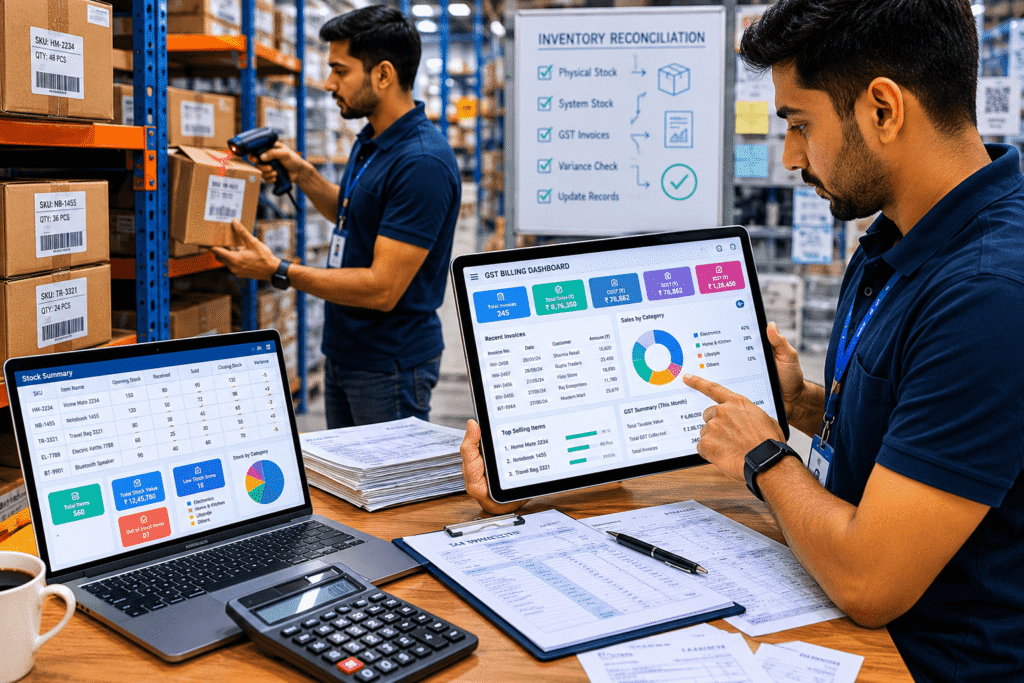
Why This Becomes a Bigger Problem as SMEs Grow
Small businesses can temporarily manage manual inventory adjustments.
However, as:
- product catalogs increase
- warehouses expand
- order volume grows
- multiple staff handle operations
Inventory control becomes much harder without integrated systems.
This is where many SMEs begin experiencing operational instability.
Practical Business Takeaway
GST billing software is important for compliance.
However, growing SMEs also need inventory visibility and operational control.
Businesses that connect billing with inventory tracking usually experience:
- better stock accuracy
- fewer operational errors
- faster decision-making
- improved business visibility

Conclusion
Inventory problems rarely appear suddenly.
Most operational issues build quietly over time when billing and inventory systems operate separately.
For growing SMEs, better inventory visibility is no longer optional. It becomes essential for maintaining operational control, improving stock accuracy, and supporting long-term business growth.