

Introduction
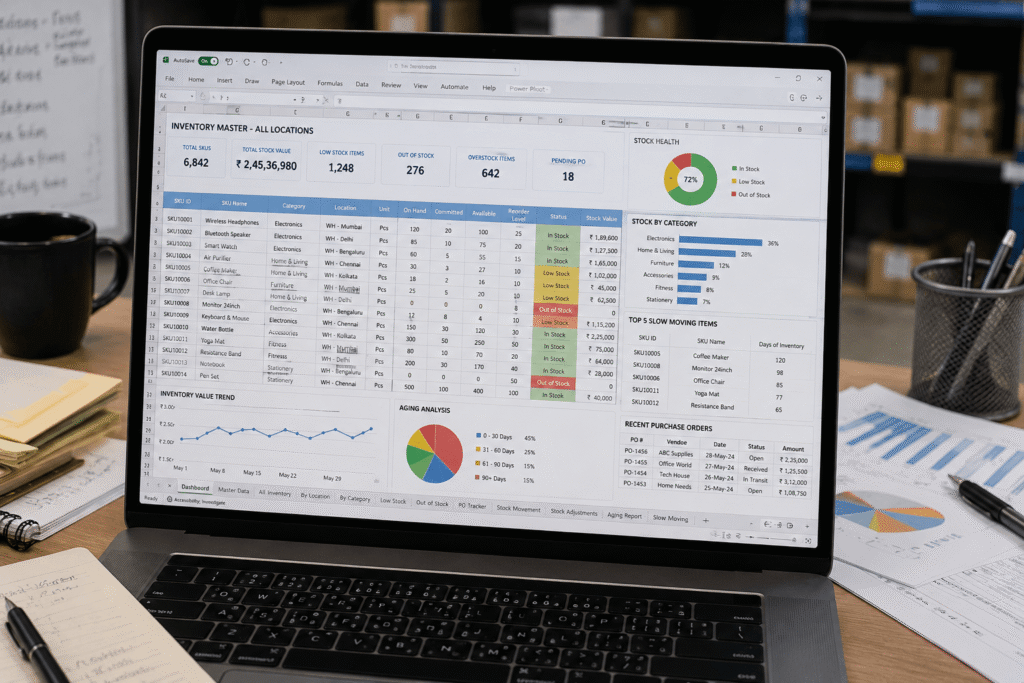
Many retailers start inventory management using Excel spreadsheets.
In the early stages, spreadsheets may feel simple, affordable, and easy to manage. However, as the business grows, inventory operations become more complex.
Over time, Excel inventory management problems begin affecting stock accuracy, reporting, purchasing decisions, and overall operational efficiency.
Many SMEs only realize these limitations after inventory mistakes start impacting business performance.
Why Spreadsheets Stop Working for Growing Businesses
Spreadsheets work well when product count and daily transactions remain small.
However, growing retailers usually face:
- frequent stock movement
- multiple staff handling inventory
- higher billing volume
- warehouse coordination challenges
- delayed stock updates
As operations expand, manual spreadsheet tracking becomes difficult to maintain accurately.

Common Excel Inventory Management Problems
1. Delayed Inventory Updates
Inventory data often gets updated late, creating stock mismatches between records and actual inventory.
2. Human Errors
Manual entry mistakes can quietly affect purchasing and stock planning decisions.
3. Lack of Real-Time Visibility
Spreadsheets do not provide live inventory visibility across teams and locations.
4. Difficulty Managing Business Growth
As inventory grows, spreadsheet files become harder to manage, slower to update, and more difficult to maintain consistently.
Operational Impact on SMEs
Inventory problems caused by spreadsheets often lead to:
- inaccurate stock reporting
- overstocking or stock shortages
- delayed customer fulfillment
- inefficient purchasing decisions
- operational confusion
These issues gradually reduce operational efficiency and profitability.

Practical Business Takeaway
Growing retailers should regularly review whether their inventory process still supports current business operations.
What works for a small business may not support a growing business efficiently.
Improving inventory visibility early helps businesses scale operations with better control and accuracy.
Conclusion
Excel spreadsheets may support inventory management in the beginning.
However, growing SMEs usually need better inventory visibility, faster updates, and more reliable operational control.
Businesses that improve inventory systems early often manage growth more efficiently while reducing operational risks.