

Introduction
In many Indian SMEs, inventory problems don’t always look like big failures.
They show up quietly.
A product appears “in stock” in the system – but it’s not on the shelf.
A fast-moving item runs out – but no one notices in time.
A customer walks away – because the information was wrong.
These are not isolated issues.
They are signs of a deeper problem: lack of inventory visibility.
What is Inventory Visibility?
Inventory visibility means knowing exactly:
- What stock do you have
- Where it is located
- How fast is it moving
- When it needs replenishment
In simple terms, it’s about having real-time clarity, not assumptions.

Where SMEs Typically Struggle
1. Stock Data is Not Updated in Real-Time
In many businesses, inventory updates happen manually or with delays.
This leads to:
- Incorrect stock levels
- Mismatched records
- Confusion between the warehouse and the store
2. Multiple Locations, No Central View
As businesses grow, they often manage:
- Store stock
- Warehouse stock
- Transit inventory
Without a centralized system, visibility breaks down.
3. Dependence on Manual Tracking
Spreadsheets or manual entries may work initially—but not at scale.
Common issues:
- Human errors
- Missed updates
- Lack of accountability
4. No Clear Stock Movement Tracking
Many SMEs cannot clearly track:
- What was sold
- What was returned
- What was transferred
This creates gaps that are hard to detect.

The Hidden Cost of Poor Visibility
Inventory visibility issues don’t just affect operations—they directly impact revenue.
- Lost sales due to stockouts
- Excess inventory is blocking cash
- Reduced customer trust
- Inefficient decision-making
Over time, these small inefficiencies compound into significant losses.
What Better Visibility Looks Like
Businesses that solve this problem typically have:
- Real-time stock updates
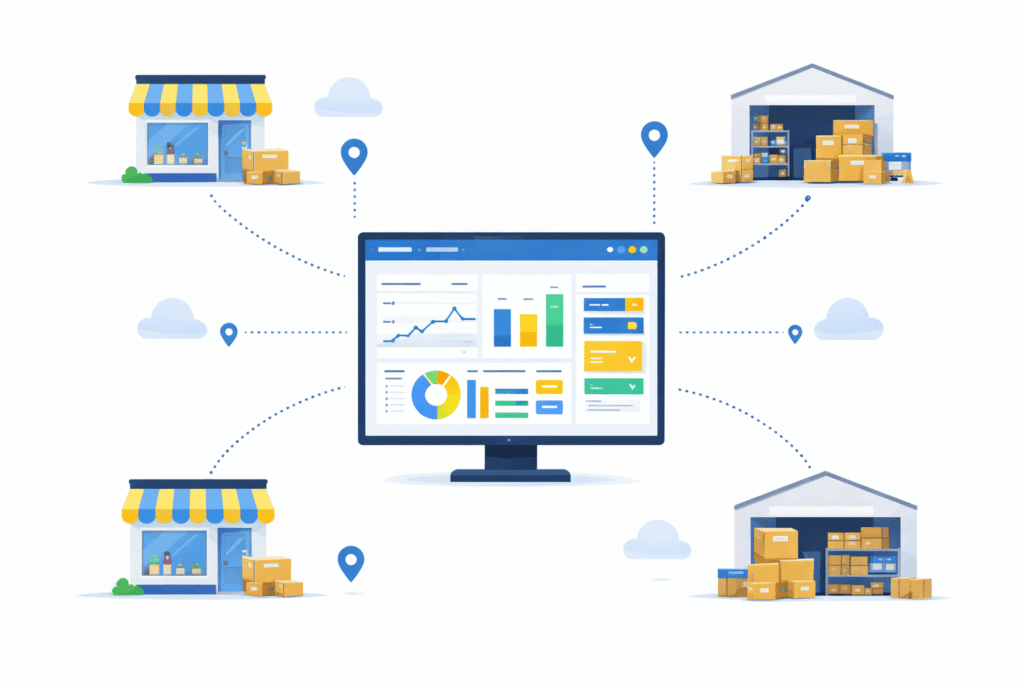
- Centralized inventory tracking
- Clear visibility across locations
- Simple reporting for decision-making
They don’t guess inventory – they see it clearly.
A Simple Way to Start Improving
Improving inventory visibility doesn’t require a complete overhaul.
Start with:
- Tracking stock in real-time
- Reducing manual dependencies
- Using a centralized system
- Reviewing stock movement regularly
Small improvements here can create a big impact quickly.
Conclusion
Inventory problems are rarely sudden.
They build quietly through poor visibility, delayed updates, and incomplete information.
The businesses that grow efficiently are the ones that:
- Identify these gaps early
- Improve visibility step by step
- Make decisions based on real data
Because in retail and distribution, clarity is not optional—it’s essential.