

Introduction
Many SME owners assume that their best-selling products are the easiest to manage.
After all, these items move every day, employees know where they are kept, and sales happen regularly.
However, the opposite is often true.
Fast-moving products are usually the first to develop inventory discrepancies because they are constantly being picked, moved, counted, and replenished. Small recording mistakes quickly multiply when the same product leaves the warehouse dozens of times each day.
These issues often go unnoticed until customers experience delays or the warehouse suddenly runs out of stock.
Why Fast-Moving Products Are More Difficult to Control
Products with high sales volumes pass through multiple hands every day.
Warehouse staff pick them frequently.
Sales teams reserve them.
Purchase teams replenish them.
Sometimes products are moved between shelves without updating the system.
When these small operational activities are not recorded immediately, inventory accuracy gradually declines.
Unlike slow-moving products that remain untouched for weeks, fast-moving inventory constantly changes throughout the day.

Common Problems SMEs Experience
Businesses often notice situations such as:
- The system shows stock, but the shelf is empty.
- Same product stored in multiple locations.
- Staff searching for frequently sold items.
- Urgent replenishment orders created unnecessarily.
- Customers waiting while employees verify stock.
Although each incident may seem minor, together they reduce warehouse efficiency and customer confidence.
The Hidden Cost of Fast-Moving Inventory Errors
Inventory errors affect much more than stock levels.
Businesses may experience:
- Longer customer waiting times
- More manual stock verification
- Increased overtime
- Higher emergency purchasing costs
- Missed sales opportunities
- Reduced warehouse productivity
As order volumes increase, these operational delays become more expensive.
Practical Ways to Improve Fast-Moving Inventory Control
Growing SMEs can significantly reduce inventory errors by following a few operational practices:
Keep Fast-Moving Products in Dedicated Locations
Frequently sold items should have clearly marked storage areas that are easy for employees to access.
Scan Products During Every Movement
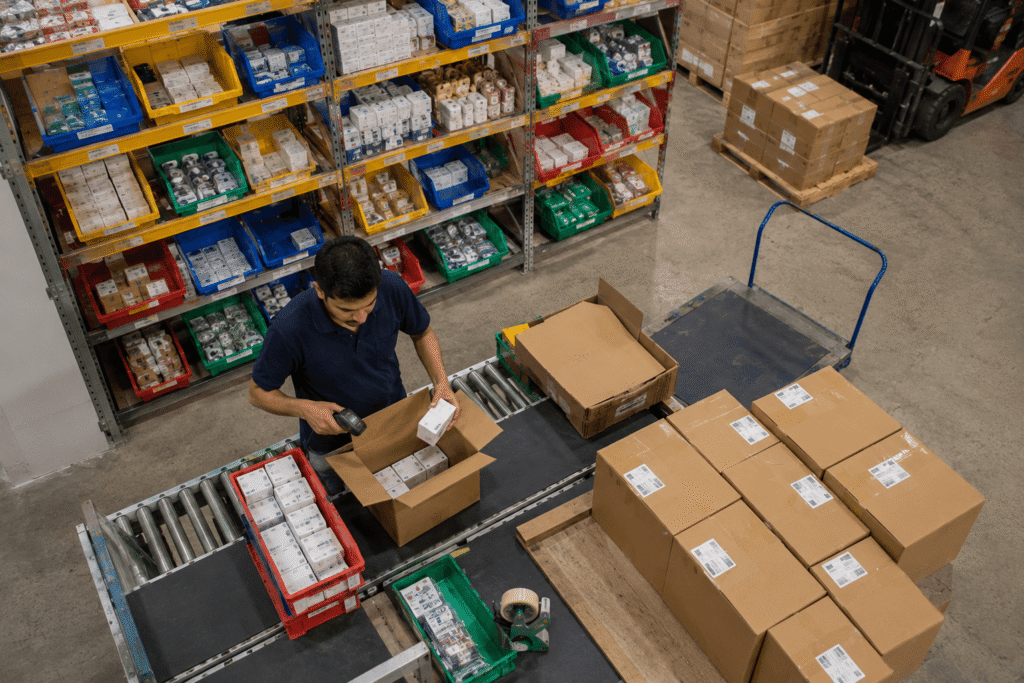
Barcode scanning helps ensure every receipt, transfer, and sale is recorded immediately.
Perform Frequent Cycle Counts
Instead of waiting for annual stock counts, verify high-volume products every week.
Review Inventory Dashboards Daily
Regular monitoring helps identify unusual stock movements before they become larger operational issues.
Standardize Warehouse Processes
Every employee should follow the same procedure for receiving, storing, picking, and dispatching inventory.
Consistency improves accuracy.
Technology Supports Better Warehouse Operations
As businesses grow, manually tracking fast-moving inventory becomes increasingly difficult.
A centralized inventory management system provides:
- Real-time stock visibility
- Barcode tracking
- Multi-location inventory control
- Low-stock alerts
- Faster order processing
- Better purchasing decisions
Technology supports operational discipline—it does not replace it.

Conclusion
The products that sell the fastest often create the biggest inventory challenges.
Without consistent warehouse processes and accurate stock tracking, even successful businesses can experience stock shortages, delayed deliveries, and dissatisfied customers.
Improving control over fast-moving inventory helps growing SMEs increase operational efficiency, improve customer service, and prepare for future growth.