
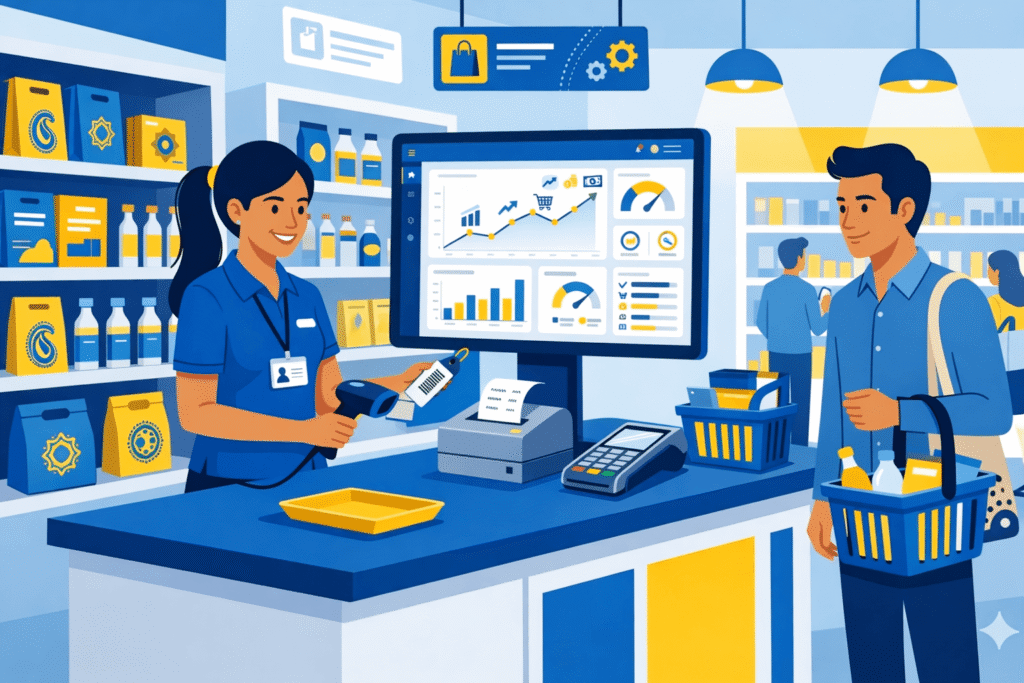
Retail businesses in India are evolving quickly. From small neighborhood stores to multi-location retail chains, businesses are handling more products, faster billing cycles, and increasingly complex GST compliance requirements.
Traditional billing systems and manual inventory tracking methods are no longer enough for growing retailers. This is why retail POS software in India has become a critical tool for modern store management.
A good POS system does more than generate bills. It connects billing, inventory management, stock tracking, and reporting into a single platform that helps retailers operate more efficiently and make better decisions.
For small businesses aiming to grow, the right retail POS software can significantly improve operational control and customer experience.
Why Retail Businesses in India Are Adopting POS Software
Many retail businesses initially start with simple billing systems or manual registers. While these methods work at a small scale, they create operational challenges as businesses expand.
Faster Billing Requirements
Modern retail environments require fast and accurate billing. Long queues and slow checkout processes can affect customer satisfaction and sales.
POS software enables retailers to generate invoices quickly, apply taxes automatically, and handle multiple payment methods including UPI, cards, and digital wallets.
Inventory Accuracy
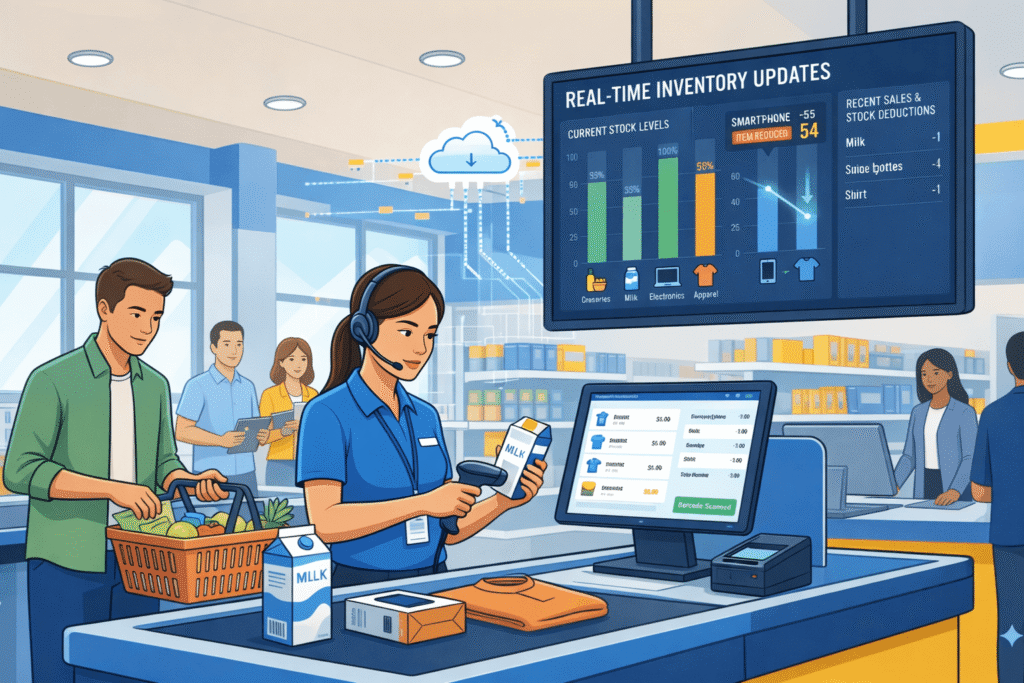
Manual inventory tracking often leads to stock mismatches. Retail POS systems automatically update stock levels whenever a sale is completed, ensuring accurate inventory records.
Businesses using integrated POS software for Indian SMEs often find it easier to manage stock and sales together.
Key Features to Look for in Retail POS Software in India
When evaluating retail POS software, small businesses should prioritize systems that simplify operations without adding complexity.
Integrated Inventory Management
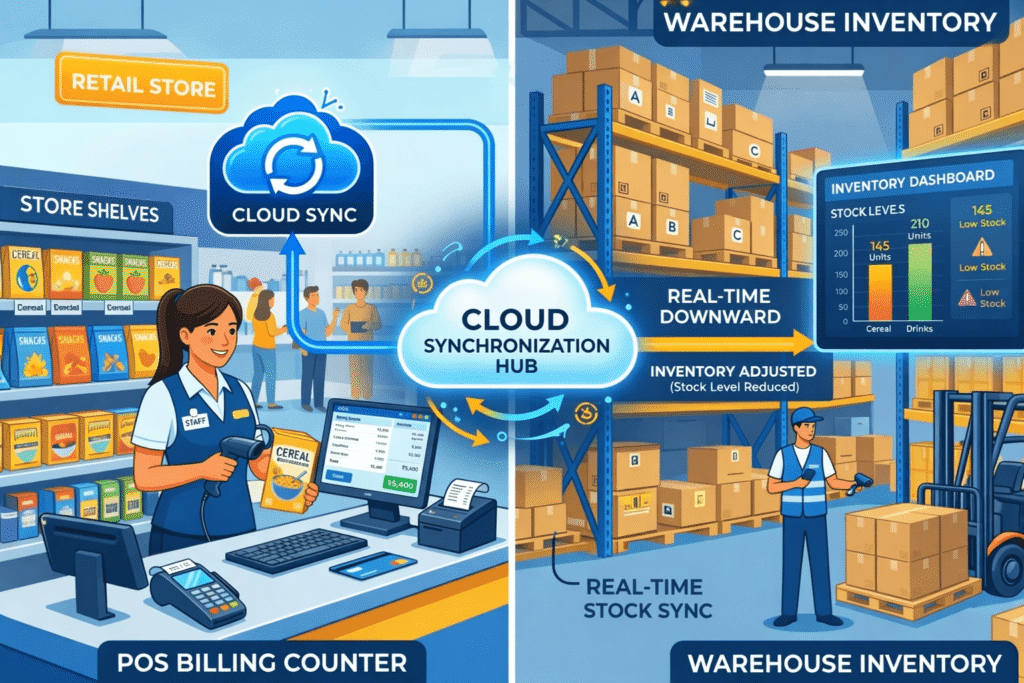
Inventory and billing should work together seamlessly. When items are sold, the POS system should automatically update stock levels.
Retailers can explore modern inventory management features that help track stock movement, low-stock alerts, and product performance.
GST-Ready Billing
GST compliance is a critical requirement for businesses in India. POS software should generate GST-compliant invoices and provide clear tax reports.
Retail systems designed for India typically include automated tax calculations aligned with GST compliance requirements in India.
Barcode Scanning
Barcode scanning speeds up checkout and reduces manual errors in billing.
Multi-Store Management
Retailers operating multiple stores need centralized dashboards that allow them to monitor stock and sales across locations.
Sales and Performance Reports
POS systems should generate clear reports showing:
• Daily sales
• Top-selling products
• Inventory turnover
• Purchase patterns
These insights help retailers make better purchasing decisions.
Benefits of Retail POS Software for Small Businesses
Implementing retail POS software in India offers several operational advantages.
Improved Billing Speed
Retail POS systems significantly reduce checkout time, helping stores serve more customers efficiently.
Accurate Inventory Tracking
Since stock updates automatically during each transaction, businesses can maintain accurate inventory levels.
Better Business Insights
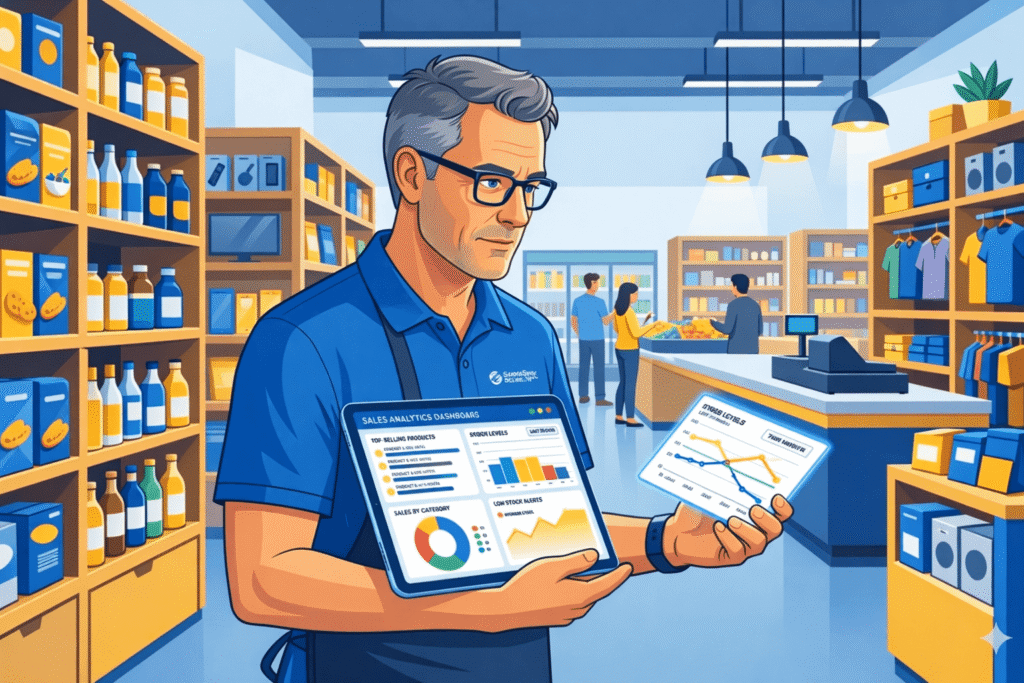
Retailers can track which products sell fastest, identify slow-moving stock, and optimize purchasing decisions.
Reduced Operational Errors
Automation minimizes manual mistakes in billing, stock updates, and reporting.
Scalability
As businesses grow, POS systems can support additional stores, users, and product catalogs without requiring major operational changes.
Retail POS Software vs Traditional Billing Systems
| Retail POS Software | Traditional Billing Systems |
|---|---|
| Automated inventory tracking | Manual stock updates |
| Real-time sales reports | Limited reporting |
| GST-compliant invoices | Manual tax calculations |
| Multi-store visibility | Store-specific records |
| Cloud access | Local computer only |
Modern retail businesses benefit from POS systems that integrate billing, inventory, and reporting into a unified platform.
When Should a Retail Business Upgrade to POS Software?
Retailers should consider adopting POS software when:
• Managing hundreds of products
• Experiencing stock mismatches
• Handling increasing billing volume
• Expanding to multiple store locations
• Spending excessive time on manual reconciliation
Delaying technology upgrades can lead to operational inefficiencies and lost revenue opportunities.
Choosing the Right Retail POS Software in India
Selecting the right POS system requires evaluating both operational needs and long-term scalability.
Retailers should consider:
• Ease of use
• Inventory integration
• GST reporting capabilities
• Hardware compatibility
• Cloud accessibility
• Pricing transparency
Businesses can review available GST billing software pricing plans to understand subscription options and scalability.
Final Thoughts
Retail POS software in India is no longer just a billing tool. It has become a central system that connects sales, inventory, and business insights into a single platform.
For small businesses looking to grow efficiently, adopting the right POS software helps improve billing speed, maintain inventory accuracy, and support compliance with GST regulations.
Retailers that invest in modern POS systems today are better prepared to scale their operations and deliver better customer experiences in the future.