
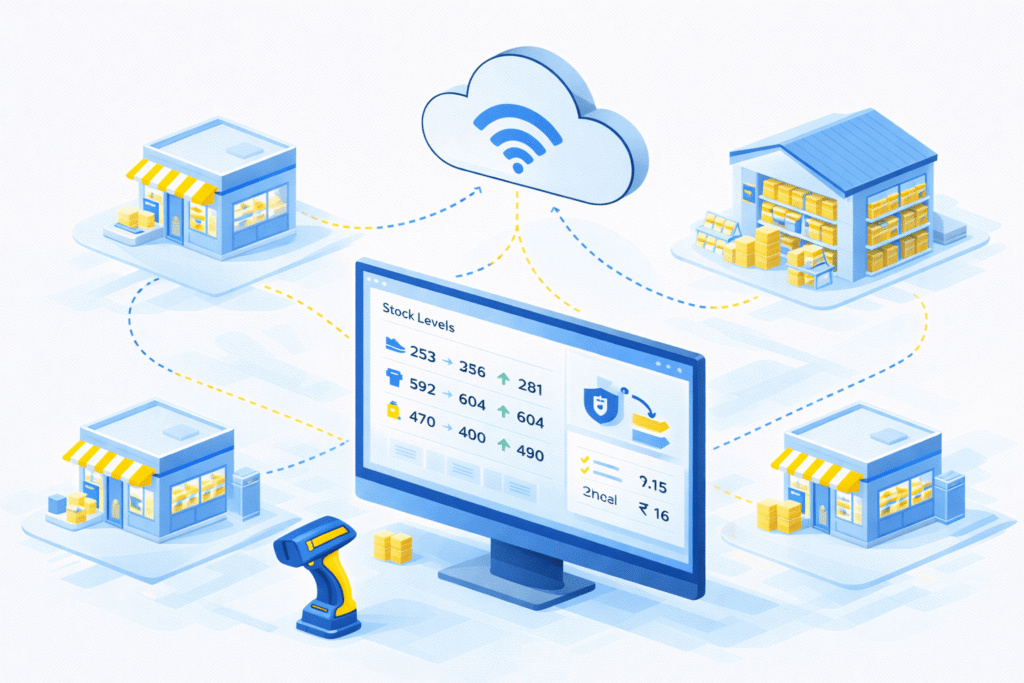
Indian small and medium-sized businesses are increasingly moving toward cloud-based systems to manage operations more efficiently. As product catalogs grow and multi-store operations become common, manual stock tracking and offline inventory tools create operational bottlenecks.
This is where cloud inventory software in India is becoming essential. Instead of relying on spreadsheets or desktop-only systems, businesses are adopting centralized cloud platforms that provide real-time stock visibility, GST-ready reporting, and scalable multi-location management.
For growing SMEs, cloud inventory is not just about convenience — it is about control, compliance, and long-term scalability.
Why Indian SMEs Are Moving to Cloud Inventory Systems
Many small businesses begin with basic inventory tracking methods:
- Excel sheets
- Manual stock registers
- Standalone billing tools
- Desktop-based software
These systems work initially. However, as businesses expand, limitations become visible.
Limited Accessibility
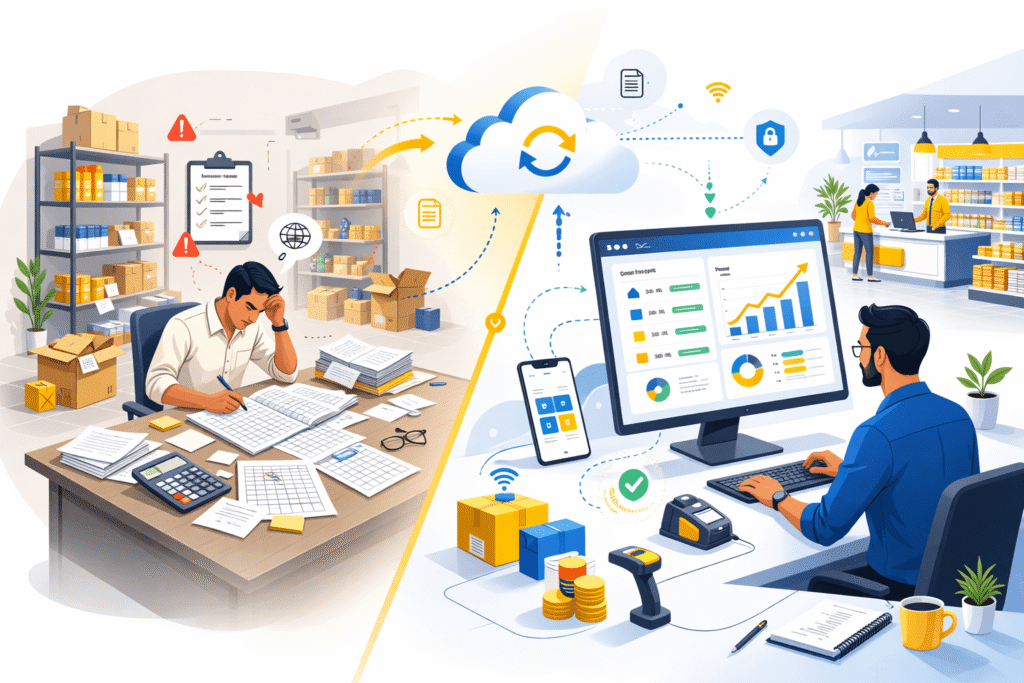
Desktop software restricts access to one location. Owners cannot monitor inventory remotely.
Delayed Updates
Stock changes must be manually updated, increasing mismatch risk.
No Real-Time Sync
Multi-store businesses struggle to maintain synchronized inventory data.
Risk of Data Loss
Manual backups or local storage increase the risk of data loss.
Cloud inventory systems address these gaps by centralizing stock management in a secure, online platform.
What Is Cloud Inventory Software?
Cloud inventory software in India refers to inventory management systems hosted on secure cloud infrastructure. Instead of being installed on a single computer, the software is accessible through the internet.
This allows businesses to:
- Access inventory data from anywhere
- Monitor stock across multiple locations
- Automatically sync sales and purchase updates
- Generate real-time reports
- Reduce manual reconciliation
Cloud systems integrate directly with POS billing systems, ensuring every transaction updates inventory automatically.
Businesses exploring modern POS software for Indian SMEs often prefer integrated cloud-based inventory for seamless operations.
Key Features to Look for in Cloud Inventory Software in India
When evaluating cloud inventory software, SMEs should prioritize operational clarity over complexity.
1. Real-Time Stock Tracking
Every sale, return, and purchase should update inventory instantly. Real-time accuracy reduces overselling and stockouts.
2. Multi-Store and Warehouse Management
Centralized dashboards allow businesses to view stock levels across outlets and warehouses from one system.
3. GST-Ready Reporting
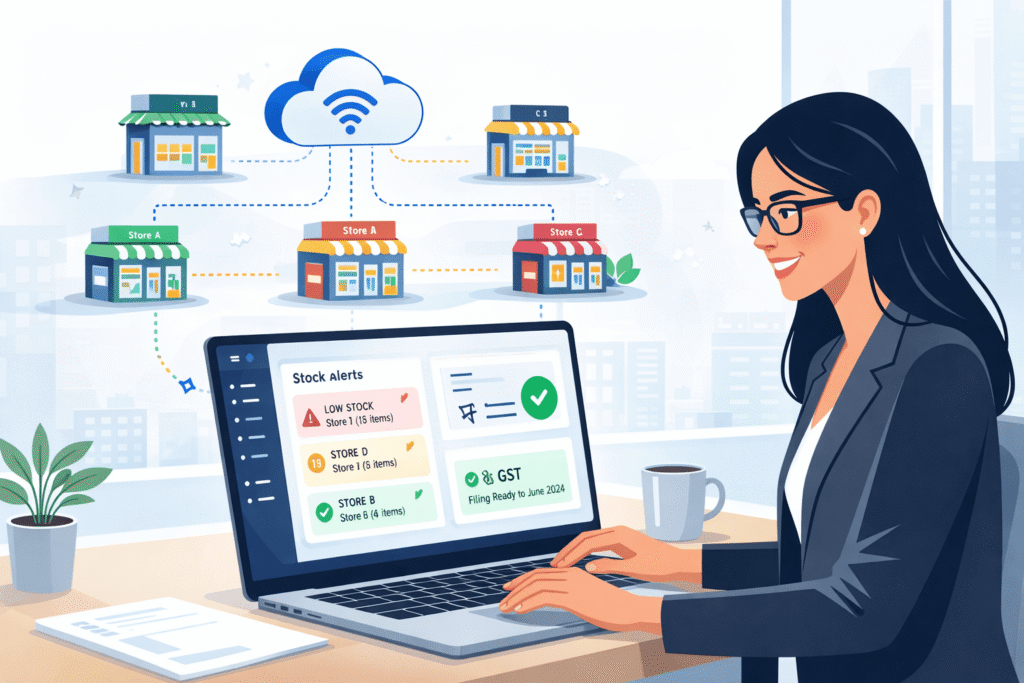
Indian businesses must comply with GST requirements. Cloud systems simplify tax documentation and reporting.
4. Low Stock Alerts
Automated notifications help maintain optimal inventory levels.
5. Cloud Backup & Security
Cloud-based platforms offer secure data storage and automated backups, reducing operational risk.
6. Scalable Architecture
As SKU counts grow or new stores are added, the system should scale without requiring replacement.
To explore structured inventory capabilities, businesses can review modern inventory management features designed for Indian SMEs.
Benefits of Cloud Inventory Software for Indian SMEs
Improved Stock Accuracy
Automated updates eliminate manual entry errors.
Better Working Capital Management
Real-time visibility reduces overstocking and frees capital.
Faster Decision-Making
Owners can access dashboards remotely and monitor performance instantly.
Simplified Compliance
GST reports and purchase records remain synchronized with stock movement.
Seamless Multi-Location Expansion
Cloud systems support growth without a complex IT setup.
For Indian SMEs aiming to scale, cloud inventory becomes a strategic advantage rather than just a technical upgrade.
Cloud Inventory vs Traditional Inventory Systems
| Cloud Inventory | Traditional Desktop Systems |
|---|---|
| Real-time updates | Manual updates |
| Remote access | Local access only |
| Automatic backup | Manual backup |
| Multi-store sync | Limited integration |
| Scalable subscription | Hardware-dependent |
Cloud systems reduce infrastructure dependency and improve operational transparency.
When Should a Business Switch to Cloud Inventory Software?
Indian SMEs should consider upgrading when:
- Managing more than 1,000 SKUs
- Operating more than one store
- Experiencing frequent stock mismatches
- Spending excessive time on manual audits
- Facing GST reconciliation delays
Delaying digital upgrades often increases operational risk and financial inefficiency.
Pricing Considerations in India
Cloud inventory software in India typically follows subscription-based pricing. Costs vary based on:
- Number of users
- Store count
- Feature requirements
- Integration capabilities
However, businesses should evaluate ROI rather than subscription cost alone.
Savings often come from:
- Reduced stock losses
- Fewer manual reconciliation hours
- Lower compliance risk
- Improved sales through better stock availability
Subscription-based cloud systems make enterprise-level tools accessible to small and growing businesses.
Ready to Modernize Your Inventory System?
Cloud inventory software in India helps SMEs build structured, scalable, and compliant operations.
If your business is expanding beyond manual tracking or desktop systems, now is the time to evaluate cloud-based inventory management integrated with POS billing.
Explore inventory management capabilities and pricing structures designed specifically for Indian SMEs.

Final Thoughts
As Indian retail and distribution businesses modernize, cloud-based systems are replacing traditional inventory tools.
Cloud inventory software in India provides:
- Real-time stock accuracy
- Secure centralized control
- GST compliance support
- Multi-store scalability
For growing SMEs, inventory clarity is operational clarity. And operational clarity drives sustainable growth.
Investing in structured cloud inventory today prepares your business for tomorrow’s expansion.