
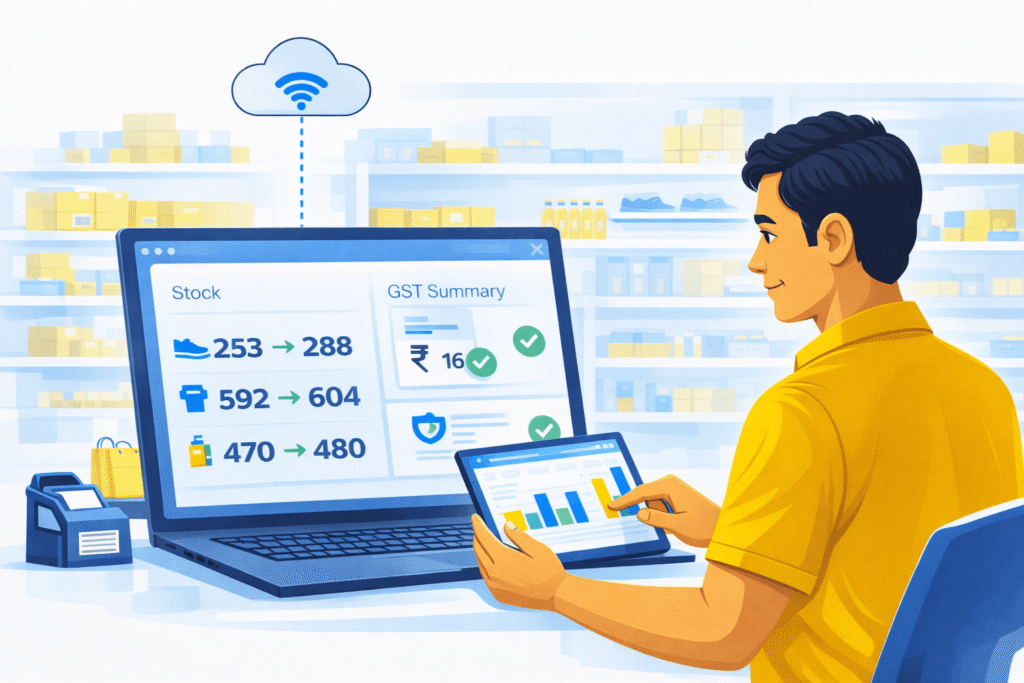
Indian small businesses are expanding faster than ever. Retailers are managing larger product catalogs, distributors are handling multi-location stock, and compliance requirements such as GST have made operational accuracy critical.
For many growing businesses, manual stock tracking or disconnected billing tools are no longer sustainable. This is why inventory management software for small businesses in India is becoming a key operational investment rather than a luxury.
Inventory is often the largest working capital component of an SME. Poor visibility leads to stock mismatches, blocked capital, missed sales, and compliance issues. Choosing the right inventory system is not about adding complexity — it is about building structured control that scales with your business.
This guide explains what small businesses in India should look for when evaluating inventory management software, including pricing considerations, scalability, and GST readiness.
Why Small Businesses in India Struggle with Inventory Management
Many SMEs begin with basic tools:
- Excel sheets
- Manual registers
- Offline billing software
- Separate systems for the warehouse and the store
As operations grow, these methods create friction.
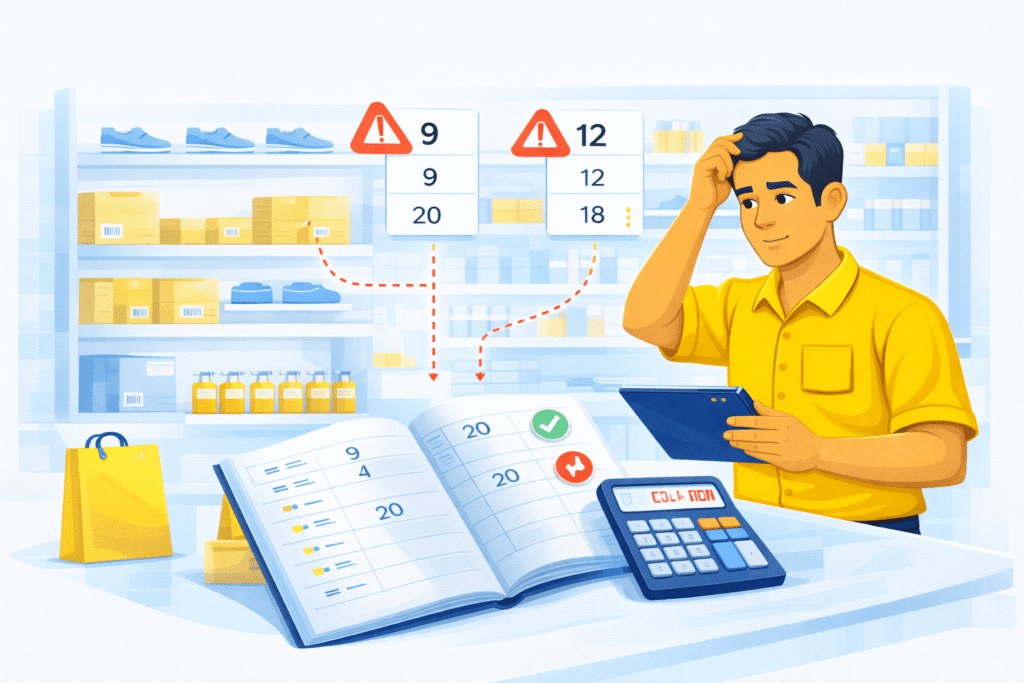
1. Stock Mismatches
Sales occur at the counter, but inventory updates happen manually later. This delay leads to inaccurate stock levels and lost sales.
2. Overstocking & Dead Stock
Without real-time insights into fast-moving and slow-moving items, purchasing decisions become guesswork.
3. GST Reporting Challenges
Inventory inaccuracies affect purchase records, tax calculations, and compliance documentation under GST regulations. For reference, GST compliance requirements are outlined by the Government of India at
https://www.gst.gov.in/.
4. Multi-Store Confusion
If a business operates more than one outlet or a central warehouse, maintaining accurate stock visibility across locations becomes difficult without integrated systems.
Inventory issues are not just operational inconveniences — they directly affect profitability and customer trust.
What to Look for in Inventory Management Software for Small Businesses in India
When evaluating solutions, small businesses should avoid feature overload and focus on core operational requirements.
1. Real-Time Stock Updates
Every sale, return, and purchase should update inventory automatically. Real-time synchronization reduces human error and prevents overselling.
2. Integration with Billing
Inventory works best when directly connected to POS billing. Disconnected systems create reconciliation gaps. Businesses using integrated POS software for Indian SMEs often experience fewer stock mismatches.
3. GST-Ready Reporting
The system should generate accurate GST-compliant invoices and reports without requiring manual intervention.
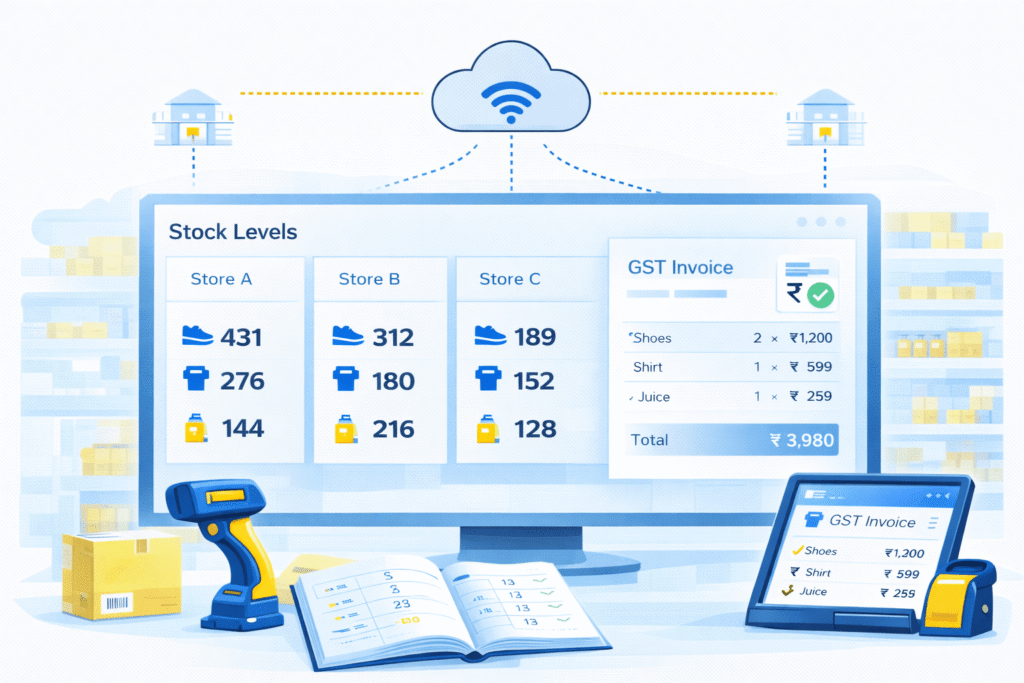
4. Multi-Location Visibility
If your business has multiple counters, outlets, or warehouses, centralized visibility is essential. Inventory transfers between locations should be tracked automatically.
5. Low-Stock Alerts & Reorder Points
Automated alerts help prevent stockouts and emergency purchases.
6. Cloud Accessibility
Cloud-based systems allow business owners to monitor inventory remotely, ensuring better oversight and decision-making.
For a detailed breakdown of features and system capabilities, explore our inventory management features designed for Indian SMEs.
Pricing Considerations for Small Businesses in India
Cost is often the first concern for SMEs evaluating new systems. However, focusing only on subscription pricing ignores the hidden cost of inventory inefficiencies.
When reviewing inventory management software for small businesses in India, consider:
- Monthly vs annual subscription models
- Number of users or terminals included
- Multi-store pricing flexibility
- Data storage and backup provisions
- Support and onboarding assistance
Most modern cloud inventory systems follow subscription-based pricing, making them more accessible to SMEs compared to large ERP systems.
The real financial impact comes from:
- Reduced stock losses
- Lower working capital lock-in
- Faster billing and reconciliation
- Reduced GST compliance risks
A small monthly fee often offsets operational inefficiencies many times over.
Cloud vs Desktop Inventory Systems for Indian SMEs
Many businesses still operate desktop-based inventory tools. While these systems may appear affordable, they create limitations over time.
Desktop Systems
- Installed on a single computer
- Limited remote access
- Manual backups
- Difficult multi-store synchronization
Cloud-Based Inventory Systems
- Accessible from anywhere
- Automatic data backups
- Centralized dashboards
- Real-time stock updates across locations
For growing SMEs, cloud-based inventory systems provide flexibility and scalability without requiring a large IT infrastructure.
Businesses evaluating long-term growth typically prefer integrated cloud POS and inventory systems to avoid rebuilding their operational stack later.
When Is the Right Time to Upgrade?
Small businesses often delay upgrades until problems become severe. However, certain triggers indicate that inventory management software is necessary:
- Managing more than 1,000 SKUs
- Frequent stock reconciliation errors
- Multiple store locations
- Increasing GST reporting workload
- Heavy dependence on Excel-based tracking
- Long hours spent on manual audits
If any of these apply, structured inventory software can significantly reduce operational friction.
How Inventory Management Software Supports Growth
The right system does more than track quantities. It improves decision-making.
Benefits include:
- Better demand forecasting
- Improved purchase planning
- Reduced shrinkage and pilferage
- Faster counter-billing
- Cleaner financial reporting
- Greater confidence in expansion
Inventory accuracy builds operational clarity. Operational clarity builds scalable growth.
Ready to Improve Inventory Accuracy?
If you’re evaluating inventory management software for small businesses in India, focus on systems that offer:
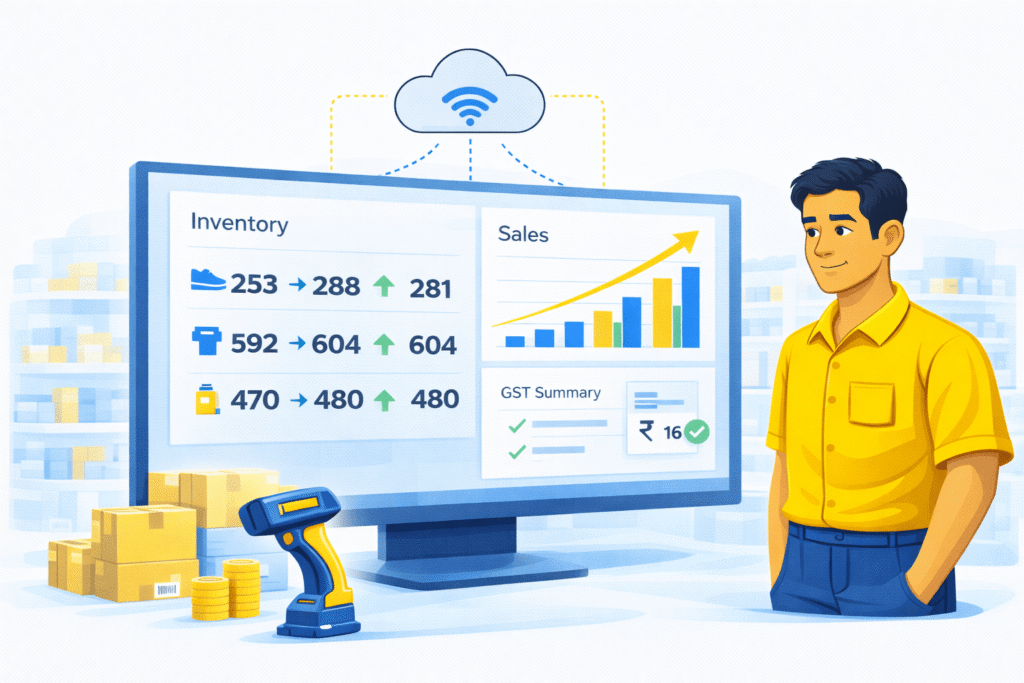
- Real-time stock tracking
- GST-ready billing integration
- Multi-store visibility
- Cloud accessibility
- Scalable pricing
Explore structured inventory management features designed for growing SMEs and review pricing options that align with your operational needs.
Final Thoughts
Inventory management software for small businesses in India is no longer optional for growing enterprises. As SKU volumes increase and compliance requirements tighten, manual tracking becomes a risk rather than a solution.
Choosing the right system is about building operational discipline, not adding unnecessary complexity. SMEs that invest in structured inventory control early are better positioned to scale confidently, improve profitability, and maintain compliance.
For Indian small businesses aiming to grow sustainably, inventory accuracy is not just a backend function — it is a competitive advantage.