
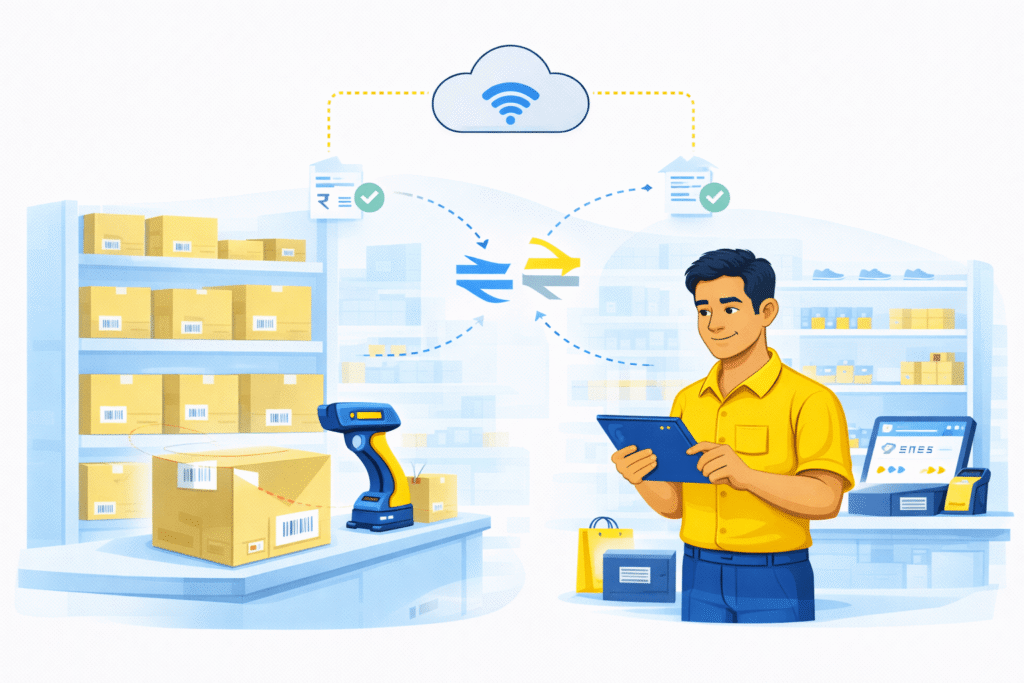
Indian small and medium-sized businesses are managing more SKUs, tighter GST compliance, and faster customer expectations than ever before. For many retailers and distributors, inventory errors are now costing more than technology itself. This is why inventory management software in India is no longer optional — it is becoming foundational for operational stability and growth.
As SMEs scale, manual stock tracking and disconnected billing tools create bottlenecks. The right system enables businesses to transition from reactive stock correction to proactive inventory control.
Why Inventory Complexity Is Increasing for Indian SMEs
Retail and distribution businesses across India are expanding product ranges, opening additional counters, and servicing both offline and online customers.
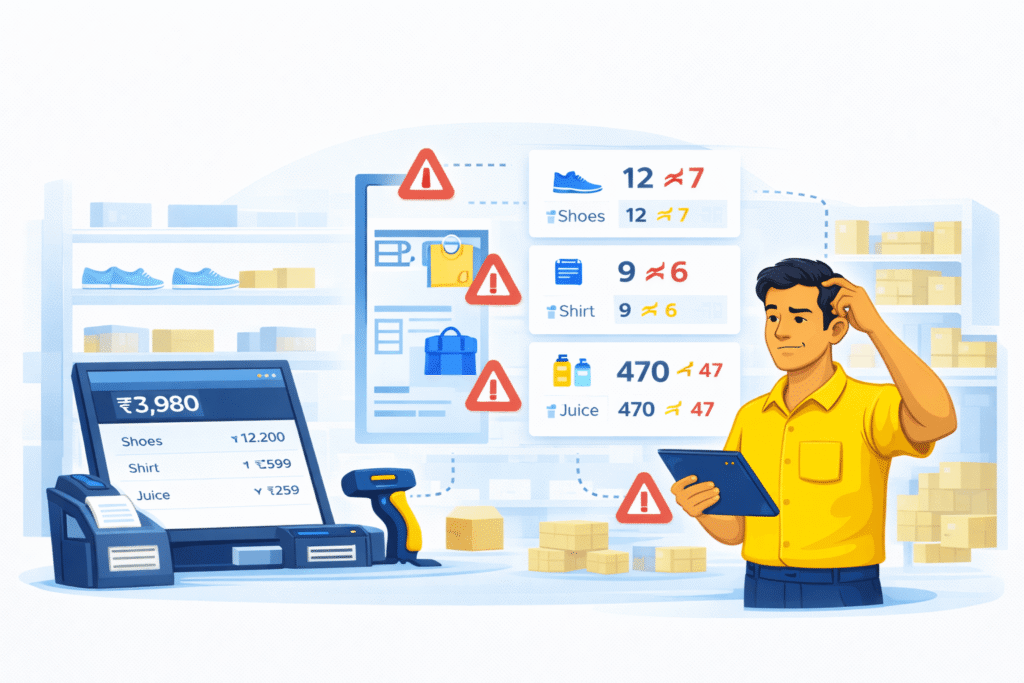
Common challenges include:
- Stock mismatches between the counter and the warehouse
- Manual updates after billing
- Delayed purchase entry
- GST reporting complications
- Lack of real-time visibility across locations
As SKU counts increase, spreadsheet-based tracking simply cannot keep pace.
What Is Inventory Management Software?
Inventory management software centralizes stock tracking, purchase management, and sales updates into one integrated system. Instead of updating stock manually, every transaction automatically adjusts inventory in real time.
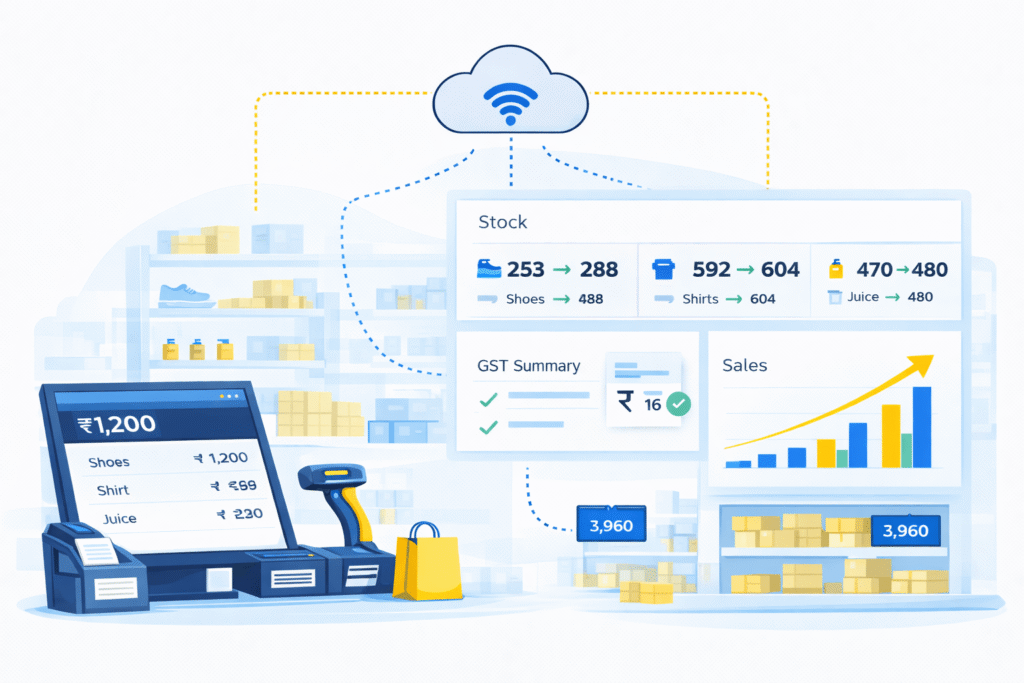
Modern systems are usually cloud-based, meaning:
- Data is accessible from anywhere
- Multi-store visibility becomes simple
- Reports are generated instantly
- No dependence on one local machine
For Indian SMEs, integration with billing and GST reporting is especially critical.
Key Features Indian SMEs Should Look For
Not all inventory tools are equal. Businesses should evaluate solutions carefully before investing.
1. Real-Time Stock Updates
Inventory must automatically update after every sale and purchase. Delays create reporting gaps and lost sales.
2. GST-Ready Reporting
GST compliance should be built into the system, not managed separately. Clean tax reports reduce accounting friction.
3. Multi-Store & Warehouse Visibility
If a business operates multiple counters or godowns, central tracking is essential.
4. Low-Stock Alerts
Automated reorder alerts help prevent stockouts and emergency purchases.
5. Integrated Billing Capability
Inventory works best when connected to billing. Disconnected systems create reconciliation errors.
Businesses evaluating solutions should review core inventory management features carefully before deciding.
How Inventory Software Supports Business Growth
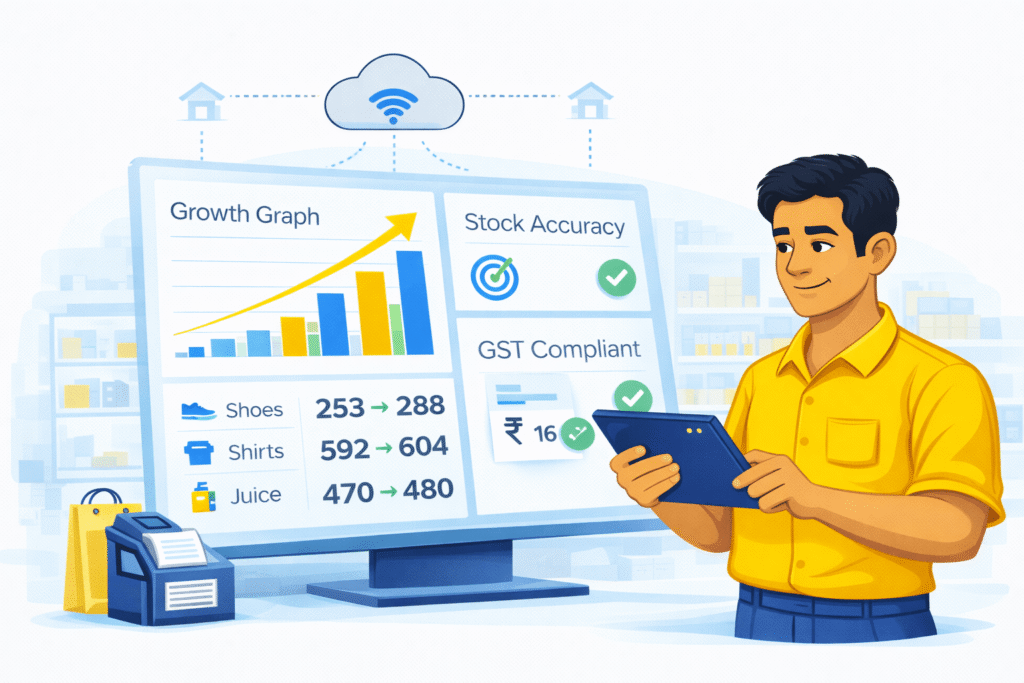
The right inventory management software in India does more than track stock. It supports decision-making.
Benefits include:
- Better demand forecasting
- Faster billing at counters
- Reduced pilferage and shrinkage
- Cleaner financial reporting
- Greater confidence in purchase planning
When stock visibility improves, business owners gain clarity. When clarity improves, profitability follows.
Who Should Consider Upgrading?
Inventory upgrades are particularly valuable for:
- Electrical & hardware retailers
- FMCG distributors
- Multi-store retail chains
- Growing SMEs expanding product catalogs
- Businesses struggling with Excel-based tracking
If inventory errors are frequent or if reconciliation takes hours every week, the system likely needs modernization.
Final Thoughts
In 2026, operational discipline is becoming a competitive advantage. Businesses that invest early in structured inventory systems reduce friction, improve accuracy, and prepare for scale.
Choosing the right inventory management software in India is not about adding complexity — it is about building control that grows with the business.